
Shopify Philippines verdict: 7/10. It costs Filipino sellers ₱1,700/month before PayMongo fees. Shopify Payments is not available here, so GCash and Maya cost an extra 2-2.5% per transaction. Worth it if you already sell on Shopee and want to build a brand. Not worth it if you are a complete beginner with no audience.
Our verdict: Shopify is the best platform for Filipino sellers who already sell on Shopee and want to build a brand. If you are new to selling online, start on Shopee first.

What Is Shopify and How Does It Work?
Shopify is a hosted ecommerce platform that lets Filipino sellers build a professional online store, accept GCash and Maya payments via PayMongo, and manage shipping with J&T and LBC — all for ₱1,700/month starting price.
- What it is: A hosted ecommerce platform for building your own online store
- Who it is for: Sellers who want their own branded website with full control
- Price range: PHP 1,700-18,500/month + payment processing fees
- Philippine payment support: Via PayMongo (GCash, Maya, cards, bank transfers)
- Local courier support: Manual setup (no native integration)
- Our rating: 7/10 for Filipino sellers (9/10 globally)
What Features Does Shopify Offer Filipino Sellers?
Shopify’s standout features for Filipino sellers are its drag-and-drop store builder, PayMongo integration for GCash and Maya payments, an 8,000+ app ecosystem, and professional themes — but it has no native Philippine courier integration and COD support is minimal.
Store Builder and Themes
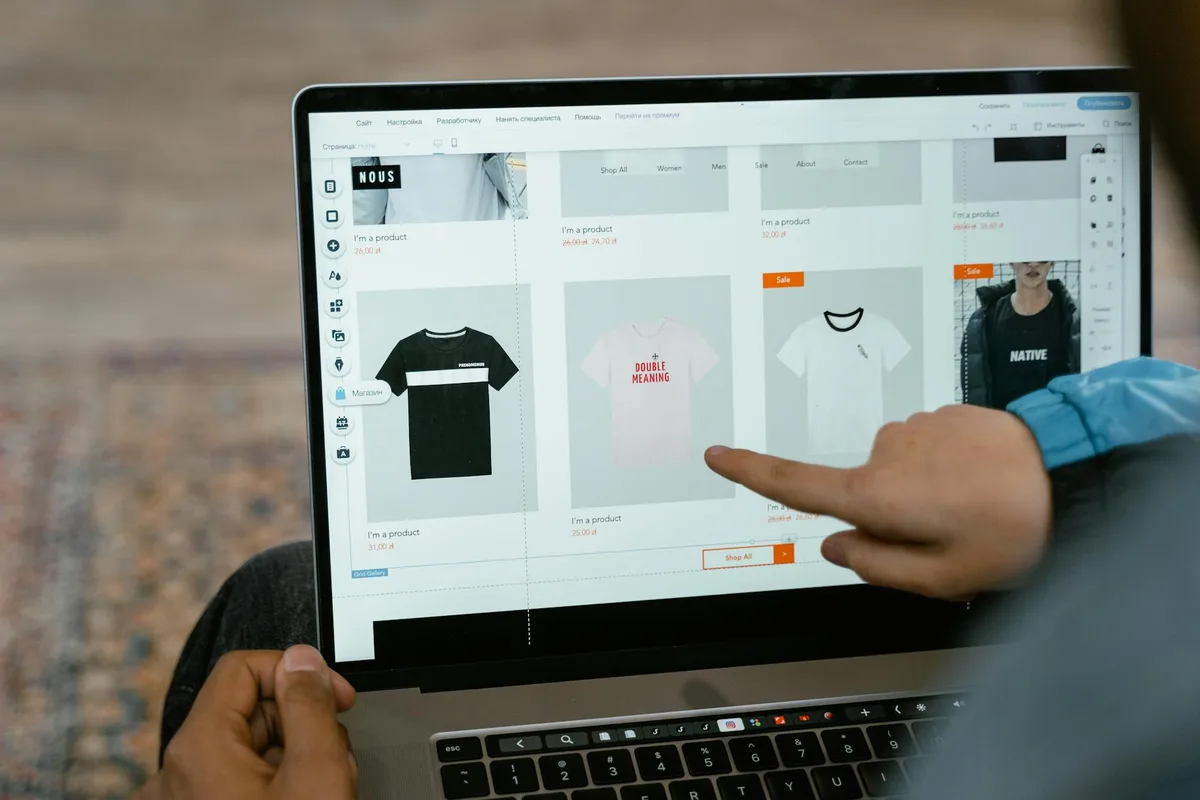
Shopify’s drag-and-drop store builder is genuinely one of the best in the industry. You choose a theme (over 100 free and paid options), customize colors and fonts, add your products, and your store looks professional within hours — no coding required.
The free themes like Dawn are clean and fast-loading. Paid themes range from PHP 10,000-20,000 (one-time purchase) and offer more advanced layouts. For most Filipino sellers, a free theme with your logo and brand colors is more than enough to start.
The editor is intuitive. If you have ever used Canva or Google Docs, you can build a Shopify store. Adding products, creating collections, setting up your navigation — everything has a clear interface with helpful tooltips.
Payment Processing with PayMongo
This is where Shopify’s Philippine experience gets complicated. Shopify Payments — Shopify’s own payment processor with the best rates — is not available in the Philippines. You need a third-party payment gateway.
PayMongo is the standard choice for Filipino Shopify sellers. It supports:
- GCash — 2% transaction fee
- Maya — 2% transaction fee
- Credit/Debit cards — 2.5% transaction fee (Visa, Mastercard)
- Bank transfers — BDO, BPI, UnionBank, and more
- GrabPay — 2% transaction fee
Setup process:
- Create a PayMongo account at paymongo.com
- Submit your business documents (DTI/SEC registration, valid ID)
- Wait for verification (1-3 business days)
- Install the PayMongo app from the Shopify App Store
- Connect your PayMongo account to your Shopify store
The catch: PayMongo charges these fees on top of Shopify’s monthly subscription. On Shopee, payment processing is included in the commission. On Shopify + PayMongo, you are paying the subscription plus 2-2.5% per transaction. At low volumes, this adds up fast.
Example cost breakdown for a PHP 500 sale:
| Cost Component | Shopee | Shopify + PayMongo |
|---|---|---|
| Monthly fee | PHP 0 | PHP 1,700 |
| Commission | PHP 20-30 (4-6%) | PHP 0 |
| Payment processing | Included | PHP 10-12.50 (2-2.5%) |
| Total cost per sale | PHP 20-30 | PHP 10-12.50 + subscription |
At 100 sales per month (PHP 50,000 revenue), Shopify costs approximately PHP 2,700 total (subscription + PayMongo fees) versus Shopee’s PHP 2,000-3,000 in commissions. They are roughly equal. Below 100 sales, Shopee is cheaper. Above 100, Shopify starts winning.
Shipping Setup
Shopify does not integrate natively with Philippine couriers. This is the biggest pain point for Filipino Shopify sellers who are used to Shopee’s one-click shipping.
What you need to do:
- Sign up for business accounts with J&T Express, LBC, Ninja Van, or your preferred couriers directly through their websites
- Set up shipping rates manually in Shopify Admin → Settings → Shipping and delivery. You can set flat rates by region (e.g., PHP 85 Metro Manila, PHP 120 Luzon, PHP 150 VisMin) or use weight-based rates
- Print waybills through each courier’s seller portal — this is a separate login from Shopify
- Schedule pickups or drop off parcels at courier branches
This is significantly more work than Shopee, where you click “Ship” and J&T shows up at your door. Some Shopify apps can partially automate this, but none fully replicate the Shopee logistics experience.
Cash on Delivery: COD is complicated on Shopify. Most payment gateways do not support it. You would need to arrange COD directly with a courier like LBC or J&T and track payments manually. If COD is important for your business (it is for many Philippine buyers), this is a significant limitation.
App Ecosystem
Shopify’s app store is its secret weapon. Over 8,000 apps covering:
- Email marketing — Klaviyo, Mailchimp (free tiers available)
- SEO tools — Plug In SEO, SEO Manager
- Social selling — Facebook Shop, Instagram Shopping, TikTok Shop integration
- Inventory management — Stocky, TradeGecko
- Reviews — Judge.me (free), Loox (photo reviews)
- Analytics — Google Analytics 4 integration, Lucky Orange for heatmaps
Many apps have free plans that work for small stores. But app costs add up — it is easy to spend an additional PHP 2,000-5,000/month on apps, inflating your total platform cost significantly. Be disciplined about which apps you actually need versus which look nice to have.
Shopee Sync: The Multi-Channel Challenge
Many Filipino sellers want to run both Shopee and Shopify simultaneously — Shopee for marketplace traffic, Shopify for brand building. In theory, this makes sense. In practice, syncing inventory between both platforms is a challenge.
Shopify does not have native Shopee integration. Third-party apps exist but are often unreliable or expensive. Most Filipino sellers manage both platforms manually — updating stock levels on both when orders come in. This works at low volumes (under 50 orders/day) but becomes unsustainable as you scale.
If multi-channel selling is important to you, factor in the manual work — or budget for a multichannel management tool.
How Much Does Shopify Cost in the Philippines?
Shopify Basic costs ₱1,700/month. Add PayMongo fees (2-2.5% per transaction), a domain (₱600-1,500/year), and essential apps (₱0-5,000/month). Realistic total for a new Filipino seller: ₱2,500-4,000/month before making a single sale.
All prices are approximate conversions from USD at the current exchange rate (1 USD = approximately PHP 58).
| Plan | Monthly Cost | Key Features |
|---|---|---|
| Basic | PHP 1,700/mo | Everything you need to start: online store, unlimited products, 2 staff accounts, basic reports |
| Shopify | PHP 4,600/mo | Better reports, 5 staff accounts, lower credit card rates (if using Shopify Payments — not available in PH) |
| Advanced | PHP 18,500/mo | Advanced reports, 15 staff accounts, calculated shipping rates, custom pricing by market |
Promotional pricing: Shopify currently offers the first 3 months at PHP 58/month (USD 1/month). This is a genuine deal — use it to test the platform without committing to the full price.
Hidden costs to budget for:
- PayMongo transaction fees: 2-2.5% per sale
- Domain name: PHP 600-1,500/year
- Paid theme (optional): PHP 10,000-20,000 one-time
- Essential apps: PHP 0-5,000/month
- Realistic total monthly cost for a new seller: PHP 2,500-4,000/month
What Are the Pros and Cons of Shopify for Filipino Sellers?
Shopify’s biggest advantage is a professional branded store with no commission on sales. Its biggest drawbacks for Filipino sellers are the monthly cost before revenue, no native GCash integration, and no built-in Philippine courier support.
Pros:
- Professional, customizable storefront that builds brand credibility
- No per-transaction commission (only payment gateway fees)
- Massive app ecosystem for almost any feature you need
- Excellent store builder — genuinely easy to use
- 24/7 customer support via chat and email
- Built-in SEO tools and blog for organic traffic
- Multi-currency support for selling internationally
Cons:
- Monthly cost before making a single sale (PHP 1,700/month minimum)
- GCash and Maya require PayMongo setup and additional fees
- No built-in traffic — you must drive every visitor through ads, social media, or SEO
- No native Philippine courier integration
- COD support is minimal
- Shopify Payments (best rates) not available in the Philippines
- Multi-channel sync with Shopee requires manual work or expensive apps
Who Should Use Shopify in the Philippines?
Use Shopify if you already earn ₱20,000+/month on Shopee and want to build a brand with higher-margin direct sales. Do not use it if you are a complete beginner — start on Shopee first, where buyers come to you at no monthly cost.
Use Shopify if you:
- Already have consistent marketplace sales (PHP 20,000+/month) and want to build a brand
- Have an existing audience on social media, email, or a blog that you can direct to your store
- Sell products with high enough margins (40%+) to absorb the monthly subscription
- Plan to sell internationally alongside the Philippine market
- Want full control over your customer experience, data, and branding
- Are willing to learn basic digital marketing (SEO, social media, email marketing)
Do NOT use Shopify if you:
- Are a complete beginner with zero online selling experience — start on Shopee first
- Have no budget for monthly platform fees before generating revenue
- Rely heavily on COD — Shopify’s COD support in the Philippines is poor
- Do not have a plan to drive traffic — a beautiful store with no visitors makes zero sales
- Sell low-margin commodity products where 2% payment processing fees eat your profit
What Are the Best Shopify Alternatives for Filipino Sellers?
Prosperna is the best Shopify alternative for Philippines-only sellers — native GCash and Maya support, starting at ₱990/month. Shopee is best for complete beginners. WooCommerce suits technical sellers who want lower ongoing costs.
If Shopify does not feel right for your situation, consider these options:
- Prosperna — Filipino-built, native GCash/Maya integration, starting at PHP 990/month. Best alternative for Philippines-only sellers who want their own website without Shopify’s price tag.
- Shopee Philippines — Free marketplace with built-in traffic. Start here if you have zero experience or zero budget.
- WooCommerce — Free open-source platform running on WordPress. Requires web hosting (PHP 200-500/month) and technical knowledge. Lower cost but higher maintenance.
For a full comparison of all your options, see our best ecommerce platforms for Filipino sellers guide.

Is Shopify Worth It for Filipino Sellers?
Shopify earns 7/10 for Filipino sellers. Excellent platform globally, but local friction — PayMongo fees, no native courier sync, no Shopify Payments — makes it better as a second channel after Shopee than a first store for beginners.
Shopify deserves its global reputation. The store builder is excellent, the app ecosystem is unmatched, and the platform scales from your first sale to millions in revenue. But for Filipino sellers specifically, the experience has friction points that global reviews ignore.
The GCash/Maya integration through PayMongo works but adds cost and complexity. The lack of native courier integration means more manual work than you are used to on Shopee. And the biggest challenge is driving traffic — on Shopee, buyers come to you. On Shopify, you need to bring them.
Our recommendation: start on Shopee first. Learn online selling, build a product catalog, and develop a customer base. Once you are consistently earning PHP 20,000-50,000/month on Shopee and want to build a brand, add Shopify as your second channel. Use Shopify for higher-margin direct sales and brand building. Use Shopee for volume and discovery. That combination is more powerful than either platform alone.
If you are ready to start your ecommerce journey, our complete guide to starting an online business in the Philippines covers everything from DTI registration to your first sale — regardless of which platform you choose.

FAQ
How much does Shopify cost in Philippine pesos?
Shopify Basic costs approximately ₱1,700/month (USD 29 at current exchange rates). Add PayMongo fees of 2-2.5% per transaction, a domain name (₱600-1,500/year), and essential apps (₱0-5,000/month). Realistic all-in monthly cost for a new seller: ₱2,500-4,000 before making a single sale.
Can I accept GCash payments on Shopify Philippines?
Yes, through PayMongo. Shopify does not have built-in GCash support — you install PayMongo from the Shopify App Store, which enables GCash (2% fee per transaction), Maya (2% fee), credit cards (2.5% fee), and bank transfers. Setup requires a verified PayMongo business account with DTI or SEC registration and takes under an hour.
Is Shopify better than Shopee for Filipino sellers?
They serve different purposes. Shopee brings buyers to you at no monthly cost — you pay commission only on sales. Shopify requires ₱1,700/month before your first sale but gives full brand control and no per-sale commission. Most successful Filipino sellers use both: start on Shopee, add Shopify once you earn ₱20,000+/month consistently.
Does Shopify work with J&T Express and LBC in the Philippines?
Not natively. You set up flat-rate shipping in Shopify manually and print waybills through each courier’s own seller portal. No one-click shipping integration exists the way Shopee offers. Third-party apps like ParcelPanel and AfterShip can help with order tracking, but the manual booking step remains.
What is the best Shopify plan for Filipino sellers?
Shopify Basic (₱1,700/month) is the right starting plan. The higher plans offer lower credit card rates via Shopify Payments — but since Shopify Payments is not available in the Philippines, those savings do not apply here. Start with Basic. Upgrade only if you need more staff accounts or the advanced reporting features.